JUST PUBLISHED: New Study Highlights That Over 34,000 People Worldwide Are Affected by APBD and Other Forms of GSD IV
April 21, 2026
We are excited to share that our global genetic prevalence of GBE1-related diseases study has been published in the Journal of Inherited Metabolic Disease Reports (JIMD Reports).
The Key Findings
The milestone study sheds light on the global burden of the GSD IV continuum of diseases -- from early-onset to adult-onset -- caused by mutations in the GBE1 gene.
-Carrier frequency: 1 in 243
-Genetic prevalence: ~1 in 235,784
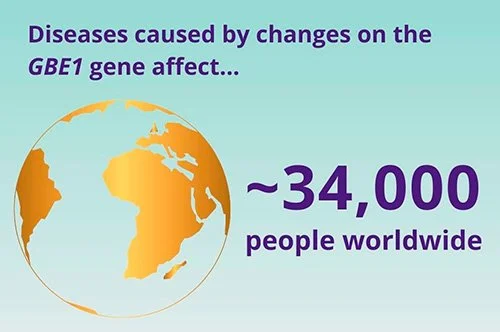
-Estimated ~34,000 affected globally
The Publication’s Backstory
In 2021, as a Chan Zuckerberg Initiative – Rare As One Cycle 1 grantee, our Foundation applied for and was selected to partner with the Rare Genomes Project’s Prevalence Study Group at the Broad Institute of MIT and Harvard. The study aimed to understand how common GBE1-related diseases are on a global level. The researchers curated a list of GBE1 gene mutations that cause (or are expected to cause) disease and used genomic and population data to estimate prevalence.
With the help of our academic research partners, we developed a poster highlighting the study findings that was presented at scientific conferences across the US. The scientific article published in JIMD Reports builds on this work -- collaborations among researchers, patient advocacy and researchorganizations, rare disease organizations, and genetic data sharing programs -- and provides a framework for estimating the global prevalence of other rare diseases. We are thankful to the following for their support:
Orhan Akman, PhD (APBDRF's Scientific and Medical Advisory Board Member)
Samantha Baxter, MS, LGC and Moriel Singer-Berk, MS (Rare Genomes Project at the Broad Institute of MIT and Harvard)
Rebecca Koch, PhD, RDN (Duke University)
Qing Lu, PhD (University of Florida)
Jennifer Orthmann-Murphy, MD, PhD (University of Pennsylvania)
The Rare Genome Project’s publicly available tool, the Genetic Prevalence Estimator (GeniE), helps users estimate the carrier frequency and genetic prevalence for autosomal recessive conditions like GSD IV. While carrier frequency describes the number of individuals who may “carry” one copy of a gene variant, the genetic prevalence indicates the frequency of a specific genetic disease or the number of individuals believed to be affected by the disease in the population. With the help of our academic research partners, we now have this important tool to assess the global genetic prevalence of these rare diseases, inform public health, research, and policy, and thereby improve the care of individuals and families impacted.”
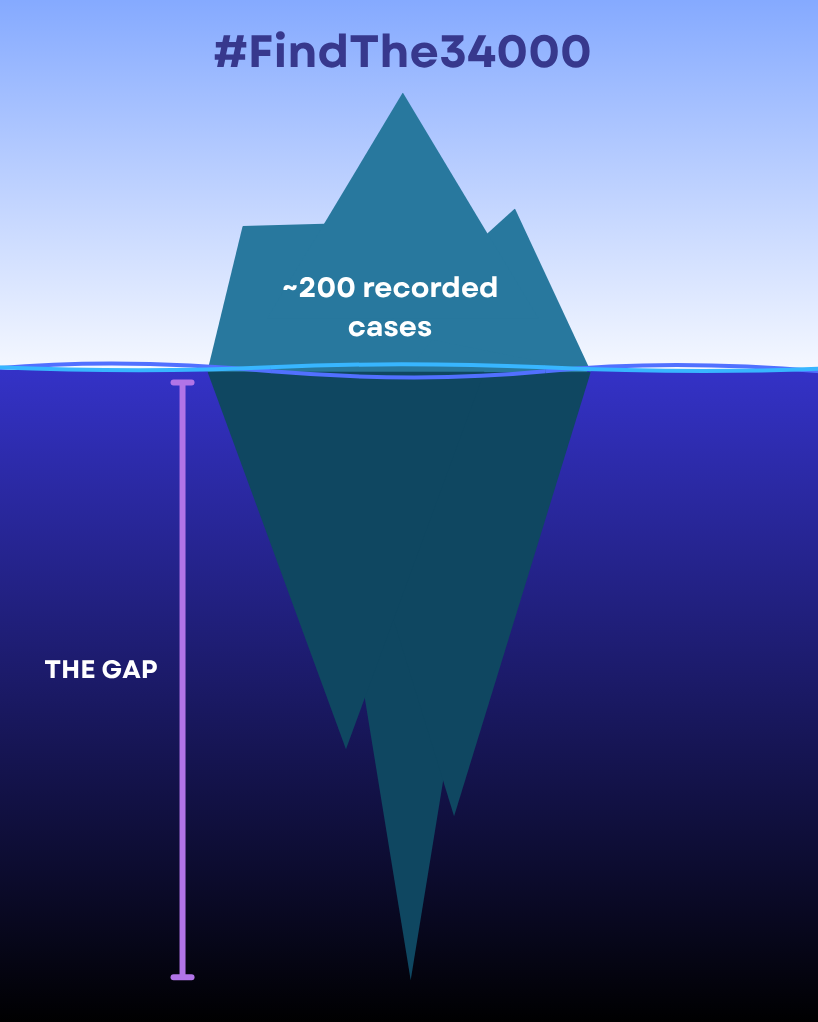
The global prevalence estimate suggests that over 34,000 individuals are affected by GBE1-related disease, which includes early-onset GSD IV and APBD. To date, only around 200 cases of APBD have been documented worldwide — highlighting a significant gap between known patients and the estimated global prevalence. The #FindThe34000 Campaign is the APBDRF’s first step in closing this gap.
Dr. Rebecca Koch, shared, “GeneReviews broadly estimates that approximately 1 in 600,000-1:800,000 individuals have GSD IV (including early-onset and APBD), with the National Library of Medicine recording ~200 cases of APBD worldwide. The gap between predicted and recognized cases suggests significant underdiagnosis.”
Dr. Koch added, “This prevalence tool is an invaluable resource for all interested parties involved in the care and advocacy of individuals and families impacted. Furthermore, it supports drug development efforts and informs public health policy.”
According to Samantha Baxter, MS, CGC, “What is important to understand is that this estimate is representative of what we know today, but what we ‘know’ is always evolving. It is important to continue to reassess the prevalence estimate any time new population data becomes available, especially for previously underrepresented groups.”