April 7, 2026
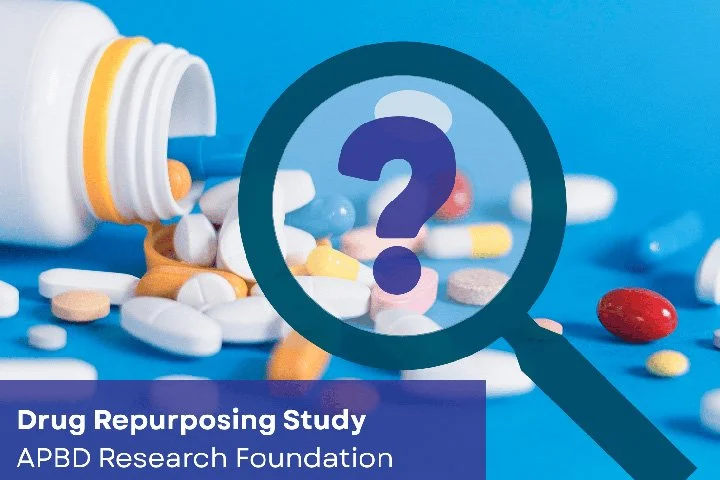
The APBD Research Foundation is excited to announce an opportunity for you to play a direct role in advancing treatment research. You do not have to leave home to participate.
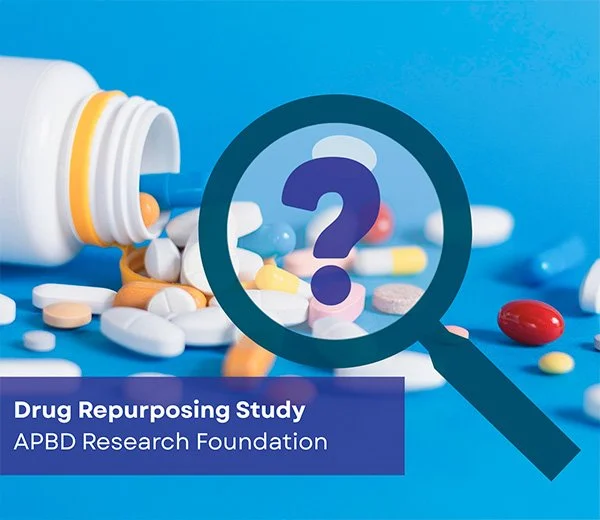
Listen to our podcast about the APBDRF Drug Repurposing Study: EPISODE 1: The Treatments May Already Be Out There
The Foundation is enrolling 30 qualifying patients AND a paired, unaffected, same-sex family member.
This study is groundbreaking. The aim is to analyze nasal swab specimens to identify an existing drug that can be repurposed to treat APBD. Well-known breakthroughs like Sildenafil (originally developed for heart disease), Minoxidil (from blood pressure treatment to hair growth), and Aspirin (now a mainstay in preventing heart attacks and strokes) show how repurposed drugs can transform familiar medicines into lifesaving innovations
Qualified patient and family member pairs will be sent nasal swab collection kits. The sampling process is like the covid nasal sampling kits we all know so well.
No clinic visits. No travel. Anywhere in the world.
INTERESTED IN PARTICIPATING?
Participant recruitment is closed.
WHAT’S NEXT?
Once the samples have been collected …
We can call on our clinical and research experts to help us prioritize the most promising drug “hits.”
We can look into access for the prioritized drugs.
A clinical trial can be designed.
HAVE QUESTIONS?
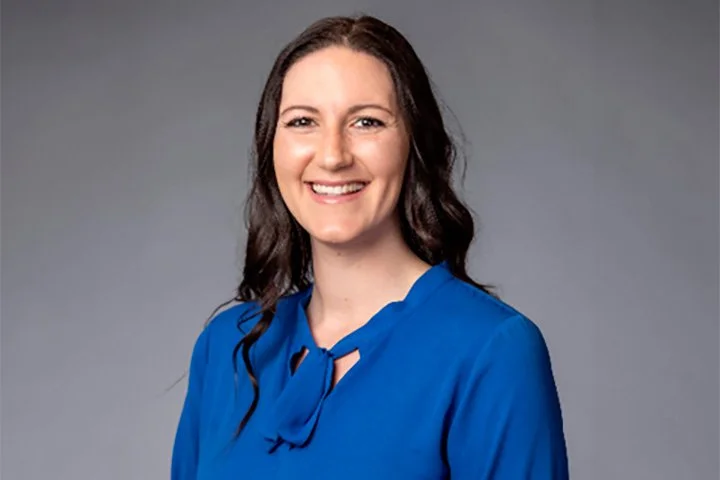
- Contact Lindsay Gill, PhD, APBDRF’s Research Manager, at lindsay@apbdrf.org
- Read our FAQs below
Updated June 9, 2026
Drug Repurposing Study Frequently Asked Questions
About the Study
What is this research opportunity?
The APBD Research Foundation is enrolling 30 qualifying individuals and an unaffected family member in a drug repurposing study. We are currently looking for patients with APBD (adult-onset GSD IV), early-onset GSD IV (aka Andersen disease), and individuals with a presymptomatic genetic diagnosis.
What does drug repurposing mean?
Drug repurposing refers to the use of existing, approved drugs (prescription or over-the-counter medications) to treat a disease. This is instead of developing a brand-new drug from scratch (which can take decades). Since existing drugs have already been approved to treat other conditions and have known safety data, drug repurposing is a faster, less expensive, and lower risk way to finding a treatment for rare diseases like ours.
Who qualifies to participate?
Our current enrollment is looking for individuals with an APBD diagnosis, early-onset GSD IV diagnosis, or presymptomatic genetic diagnosis who have an unaffected, same-sex biological family member (mother/father, brother/sister, son/daugher).
Confirmatory genetic testing is preferred.
Unaffected family members can be carriers or non-carriers.
If you have questions as to whether you qualify, please contact our Research Manager, Lindsay Gill, PhD, at lindsay@apbdrf.org.
Your Participation
What would I actually have to do?
Very little — and none of it requires travel. The APBDRF Drug Repurposing Study uses a nasal swab sample (just like a COVID-19 or Flu test) for analysis. Just collect the nasal swab and send it back!
Do I have to go to a clinic or hospital?
No. There are no clinic visits, no hospital trips, and no travel required. Nasal swabs will be sent directly to your home with return shipping materials and instructions.
Does my family member need to live near me to participate?
No. If you are in the US, the nasal swab collection kit for you and your unaffected family member can be shipped separately. However, if your family lives with you or can visit your home, it can be helpful to have both kits shipped together to one address.
If you are located outside of the US, it would be best if the kits for you and your family member can be shipped together to one location.
Is there any cost to participating?
No. Thanks to generous donations from our community, the participant biosample collection and drug repurposing study fees are covered.
What Happens to My Sample?
What will my samples be used for?
Your nasal swab sample will be used to isolate genetic material to generate a genetic expression profile of all the genes in the body compared to your unaffected family member. The profiles from all participants will be used to screen a database of existing drugs, generating a “hit” list that may be able to treat APBD and/or GSD IV.
Will my personal information be shared?
Your privacy is protected. Samples and data are stored and analyzed in a secure biorepository. Your information is de-identified using your Clinical Research ID (CRID) before any analysis or sharing with research partners. Please contact our Research Manager if you have specific privacy questions.
Can I get my results back?
No. This is a group-level research study, so results will be reflective of the group of participants. Individual results will not be returned to participants. However, findings from the study as a whole will be shared to the community as they become available. Please contact our Research Manager about this if it is important to your decision.
Getting Started
What is a CRID and why do I need one?
A CRID is a unique research identifier — think of it as your personal research ID number. It allows your data and samples to be securely linked across different studies without using your name or personal details. Setting up your CRID is the first step to participating and takes just a few minutes.
How do I sign up or learn more?
Fill out the APBDRF Drug Repurposing Study Recruitment Form to sign-up and determine your eligibility. To create your CRID, step-by-step instructions - as well as a walkthrough video - are available on our website here: Create your Clinical Research ID
How many spots are available?
We are enrolling the first 30 qualifying applicants. Spots are limited and will be offered on a first-come, first-served basis to those who meet the eligibility criteria.
Is there a deadline to apply?
Enrollment will close on May 1, 2026.