Q&A with Felix Nitschke, PhD, Mayank Verma, MD, PhD, and Nirbhay Yadav, PhD
January 20, 2026
Dr. Felix Nitschke is an Assistant Professor in the Departments of Pediatrics and Biochemistry at University of Texas - Southwestern and Co-Chair of the APBD Research Foundation’s Scientific and Medical Advisory Board. Dr. Nitschke’s laboratory conducts research to understand glycogen metabolism and its role in genetic neurological diseases, like APBD and Lafora Disease. As such, he has been an important contributor to APBD research.
Dr. Mayank Verma recently joined the faculty at UT Southwestern as an Assistant Professor in the Department of Pediatrics. Dr. Verma is establishing his own research lab to study GSD IV, APBD, and Lafora Disease, among other genetic neuromuscular disorders, after training as a fellow with Dr. Berge Minassian.
Dr. Nirbhay Yadav is an Associate Professor of Radiology and Radiological Science at Johns Hopkins School of Medicine and Kennedy Krieger Institute. Dr. Yadav’s research focuses on the development of specialized MRI imaging methods to detect cellular and molecular changes in animal models and patients with various diseases, including APBD and other glycogen storage diseases.
In 2024, Dr. Nitschke -- along with his co-investigators Dr. Verma and Dr. Nirbhay Yadav .-- received a Million Dollar Bike Ride grant titled “From Mouse to Human – Establishing Novel Biomarkers for APBD”. Their grant has focused on developing reliable MRI imaging, urine, and blood biomarkers to monitor APBD progression and evaluate the effectiveness of future treatments.
We interviewed Drs. Nitschke, Verma, and Yadav recently to give you a chance to get to know them and learn more about their innovative and collaborative APBD research.
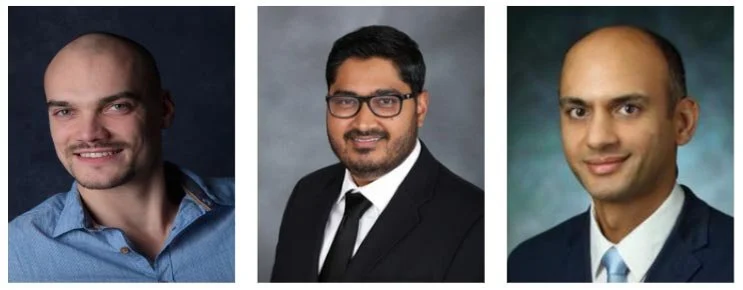
From left to right: Dr. Felix Nitschke, Dr. Mayank Verma, and Dr. Nirbhay Yadav
Q: What inspired you to get into research? What inspired you to pursue this field of research?
Dr. Yadav: I like to solve problems. My PhD training involved characterizing mathematical and physical properties in how molecules move in complicated objects (e.g., rocks). After my PhD, I wanted to apply these skills to solving problems in human health. After learning the mathematical and physical foundations of magnetic resonance imaging (MRI), I still investigate ways of characterizing molecules (glycogen), but now I investigate them in living tissue.
Q: What excites you about rare disease research?
Dr. Yadav: I see rare disease research as solving a huge scientific puzzle. Each unique mutation allows us to isolate a specific biological pathway and work on addressing the subsequent challenges. The insights we gain from each rare disease often lead to solutions to other more common diseases.
Q: How did you approach designing this collaborative project?
Dr. Nitschke: With the intention to address the lack of a validated biomarker in APBD, we saw the opportunity for a comprehensive study that integrates multiple research dimensions into a meaningful approach.
We had identified a novel APBD-related brain metabolite, a non-invasive method likely to detect the metabolite, and -- among the three of us -- the diverse expertise to correlate the new biomarker candidate with several other identified disease hallmarks. The designed study aims for a systematic correlation of various promising disease biomarkers with disease progression to validate disease markers that are most predictive of disease state.
We had hoped to include and compare the work in APBD mice and patients, but funding only sufficed for biomarker correlation in mice. The crux of the study was to raise a suitably aged colony of littermate APBD and control mice at UTSW, send them to Johns Hopkins for glycoNOE MRI (Dr. Yadav’s MRI method for measuring glycogen), and then back to UTSW for specialized specimen collection and in-depth biochemical analyses.
Q: In a sentence or two can you describe how this study is progressing?
Dr. Nitschke: The study has been progressing well. Littermate mice were generated and aged, sent for MRI, received back with specimen collection successfully completed. Analyses are currently ongoing.
Q: Have there been any challenges?
Drs. Nitschke: The biggest challenge so far was to coordinate mouse breeding, aging, tight shipment dates, and animal shipment/quarantine regulations between two institutes in a way that a meaningful and feasible experiment is ensured. Thanks to the reliable efforts of all teams involved, the execution of the project was smooth, and all animals completed their journey successfully and as planned.
Q: Your project focuses on establishing new biomarkers for APBD. Can you tell us why biomarkers are so important?
Dr. Verma: Clinical trials for rare diseases are really important but tough to do. We see regularly in the clinic and in a clinical trial that a patient may feel an improvement with a therapy soon after starting a trial. But for a clinical trial to succeed there must be a clear way to document that improvement (or decline or deterioration has occured). In more common diseases, you can do a controlled trial to measure the placebo effect (health responses to an inactive treatment, such as a sugar pill) and the impact of confounding variables, like age, lifestyle, and demographics. However, in rare diseases, we don't have that luxury because there are much fewer patients. Here, biomarkers serve as a critical way for clinicians and researchers to measure how well or unwell a patient is, or how a treatment is working. In a disease like APBD, where patients may have a wide range of symptoms as well as the severity of symptoms that are ever evolving, it is important to have an objective measure for how a condition is progressing (or not progressing).
Q: Your research has important implications for clinical trials in APBD. Can you tell us more about this?
Dr. Verma: We are looking at multiple biomarkers for APBD that all have a biological basis for why they may be changing in APBD. Being able to compare an imaging biomarker, neuroimmunological biomarker, and metabolite biomarker together in the same cohort of animals allows us to see which biomarker has the largest change from the controls and, therefore, may be the most important biomarker for characterizing a patient’s disease or treatment effects. For example, if a biomarker only has a 10-20% difference in the APBD mice compared to the healthy mice, it would be hard to imagine it being able to measure the difference effectively in a diverse patient population that may feature large differences in disease severity, age, lifestyle, and symptoms.
Q. Your research has implications for several glycogen storage disorders that impact different steps of glycogen metabolism. Tell us why. What is needed to build momentum?
Dr. Nitschke: Insight into one glycogen storage disease is very likely informative for other glycogen storage diseases as well. This pertains to the understanding of pathogenetic mechanisms (how mutations cause disease), but it also includes biomarker candidates and potential therapy approaches.
One example is our recent finding that the Pompe Disease marker glc4 is elevated in the urine of APBD mice. Likewise, biomarkers identified and validated in APBD may be relevant in other diseases with glycogen accumulation. However, glycogen storage diseases often affect several organs with different clinical consequences, which can complicate the transfer of biomarker and therapy approaches and require step-by-step assessments in appropriate model systems and patients.
Q: What are your next steps for this project?
Dr. Nitschke: The next steps include in-depth biochemical analyses of our mice that were analysed with the glycogen MRI protocol to evaluate and predict which potential biomarkers show the strongest correlation with APBD to sensitively track the disease state of patients in future clinical trials.
Thank you, Drs. Nitschke, Verma, and Yadhav. We wish you much success on behalf of our community!