February 24th, 2025
The APBD Research Foundation rallied its community to mark Rare Disease Day on February 28, joining the National Organization for Rare Disorders and rare disease advocates around the world.
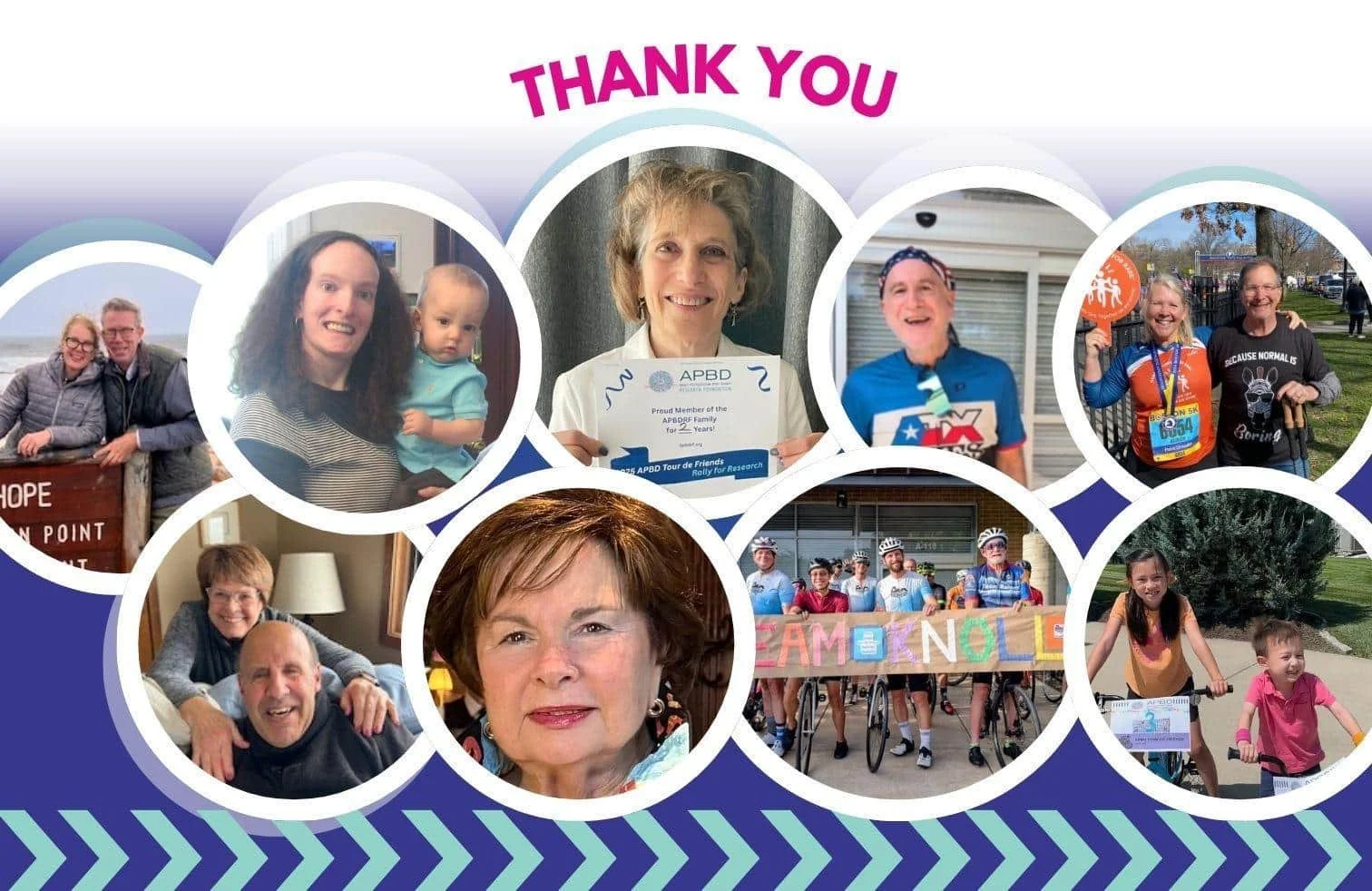
In the lead-up to the day, we mailed zebra-striped pins and ribbons to community members and asked them to share their pictures, personal dreams, and why they are committed to raising awareness of APBD. Their heartfelt messages highlighted the hope for treatments and a cure.
Faye Rosenberg, our volunteer for this year’s Rare Disease Day awareness efforts, was inspired by her family’s APBD journey and the memory of her late father, Gregory Weiss, the co-founder of the APBD Research Foundation, Gregory Weiss. Faye shared, “I’m raising awareness because my family has been robbed of too many milestones and memories that could have included my father, had APBD never happened to him.”
Since its inception in 2008, Rare Disease Day has become a cornerstone in building a global, diverse, and multi-disease community that is united by one common goal: to raise awareness and drive change. The day encourages individuals, communities, and companies to show their support by embracing the “Show Your Stripes” campaign, symbolizing the uniqueness of each rare disease journey.
APBD is 1 of 10,000 rare diseases affecting over 30 million (or 1 in 10) people in the US — and 300 million globally. It is also among the 95% of rare diseases that lack FDA-approved treatments.
The zebra is recognized as the official symbol of rare disease because it embodies its uniqueness through its distinctive black and white stripes. Just as zebras’ stripes are never the same, individuals sharing an APBD diagnosis are unique people with wishes, goals, dreams, and plans.
News Releases
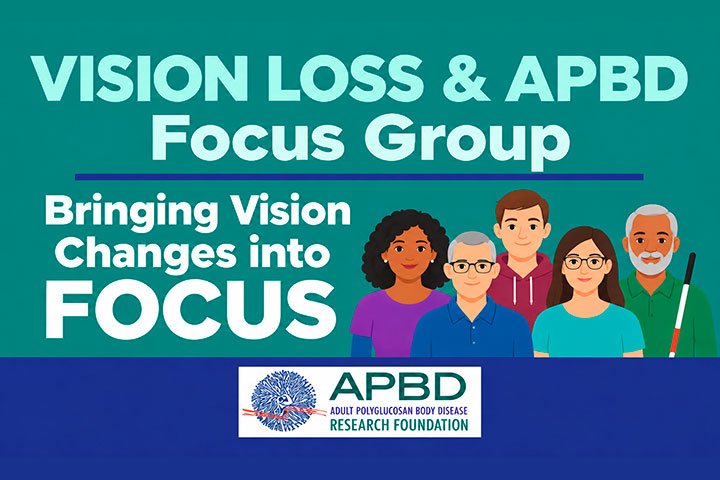
The APBD Research Foundation is preparing to host a Vision Loss and APBD Focus Group to convene later this fall. This group will bring together APBD patients who have experienced or are experiencing changes to their vision, caregivers, and clinicians in a 1.5 hour session to learn about lived experiences with vision-related symptoms and begin to understand how vision loss is associated with APBD.
The APBD Research Foundation is excited to announce a new collaboration with Costello Medical, Inc., following the Foundation’s successful application to Costello Medical’s pro bono project initiative for Rare Disease organizations.
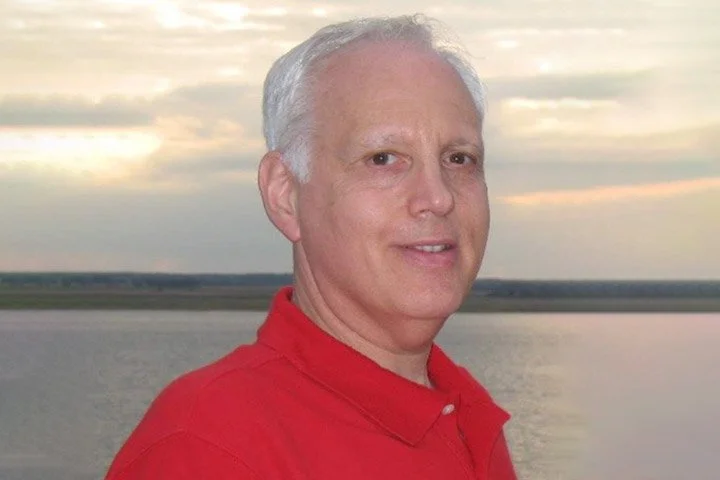
We are honored to share the story of an extraordinary act of generosity and planning by former Board member David Epstein. David passed away on January 3, 2026.
The APBD Research Foundation is delighted to announce that Lindsay Gill, PhD has been promoted to full-time Research Director.
We are thrilled to announce that our community raised an incredible $201,177 during the 2026 APBD Tour de Friends Rally for Research fundraising campaign, exceeding our original goal of $120,000.
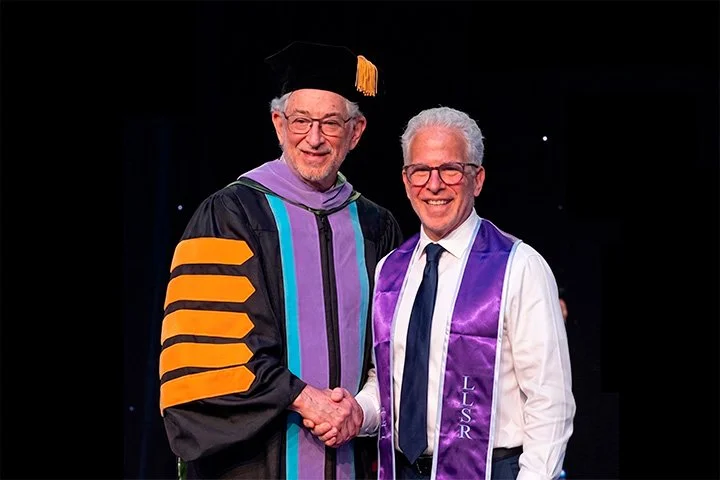
The Academy of General Dentistry (AGD) recently awarded the APBD Research Foundation's co-president Dr. Jeff Levenson with the Lifelong Learning & Service Recognition (LLSR). He received this award along with 36 other LLSR recipients during the AGD’s scientific session in Las Vegas, NV on June 27, 2026.
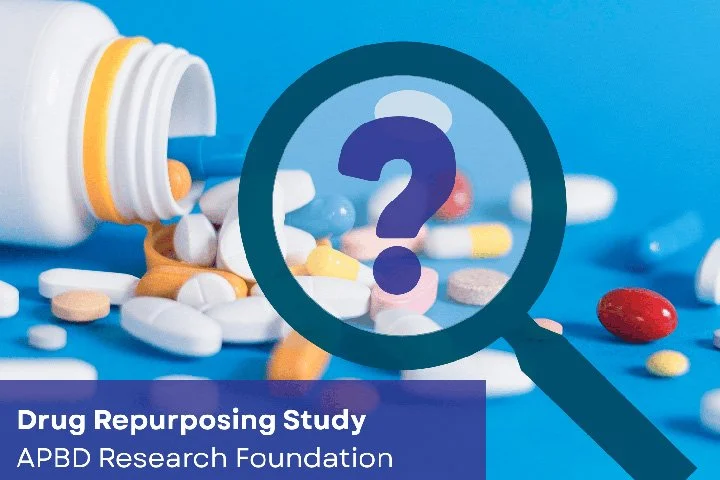
In April 2026, the APBD Research Foundation announced participant recruitment for its APBDRF Drug Repurposing Study initiative in partnership with COMBINEDBrain. We are grateful to the patients and families in our community that have volunteered to provide biosamples to help make this study a reality.
The APBD Research Foundation is pleased to announce the third of our 2025 Rally for Research Pilot Grant Program grant recipients: Rebecca Koch, PhD, RDN at Duke University. Her research project is entitled, Gene Therapy to Treat the Neurophenotype of Glycogen Storage Disease Type IV.
The APBD Research Foundation is pleased to announce the second of our 2025 Rally for Research Pilot Grant Program grant recipients: Mayank Verma, MD, PhD at UTSW Medical Center. His research project is entitled Preclinical Validation and Biomarkers in APBD of a GYS1-ASO Currently in Phase 1 Clinical Trial for Lafora Disease
On behalf of the APBD community, the APBD Research Foundation has responded to the US Food and Drug Administration's (FDA) request for public comments for its recently released draft guidance for the use of the Plausible Mechanism Framework for individualized genetic therapies.